
Lymphoma treatment in India offers world-class medical care at a fraction of the cost compared to many Western countries. With access to advanced technologies, experienced oncologists, and specialised cancer centres, India has become a preferred destination for patients seeking effective care for both Hodgkin & non-Hodgkin lymphoma.
Treatment options include chemotherapy, immunotherapy, radiation therapy, bone marrow transplant, and targeted therapies, individual to each patient’s condition and cancer stage. Indian hospitals follow global treatment protocols, ensuring safety and high success rates. Supportive care, affordability, and comprehensive healing approaches make India an ideal place for lymphoma management and recovery.
What is Lymphoma?
Lymphoma is a type of cancer that begins in the lymphatic system, which is part of the body's immune system. It occurs when lymphocytes—a type of white blood cell—grow and multiply uncontrollably. Lymphoma can affect lymph nodes, spleen, bone marrow, and other organs.
Book Appointment
GET A FREE QUOTE
There are two main types: Hodgkin lymphoma and non-Hodgkin lymphoma, each with different subtypes and treatment approaches. Common symptoms include swollen lymph nodes, fever, night sweats, weight loss, and fatigue. With early diagnosis and proper treatment—such as chemotherapy, radiation, or immunotherapy—many forms of lymphoma are highly treatable and even curable, especially in advanced medical centres.
Types of Lymphoma
Lymphoma is broadly divided into two main categories: Hodgkin Lymphoma (HL) and Non-Hodgkin Lymphoma (NHL). Each type has multiple subtypes, differing in progression, symptoms, and treatment. These categories have 8 subtypes of Lymphoma cancer.
Symptoms of Lymphoma
Lymphoma is a cancer of the lymphatic system that can cause a range of symptoms depending on its type, stage, and where it spreads. Common signs include painless swelling of lymph nodes, particularly in the neck, armpits, or groin, along with unexplained weight loss, persistent fatigue, fevers, and night sweats.
Book Appointment
GET A FREE QUOTE
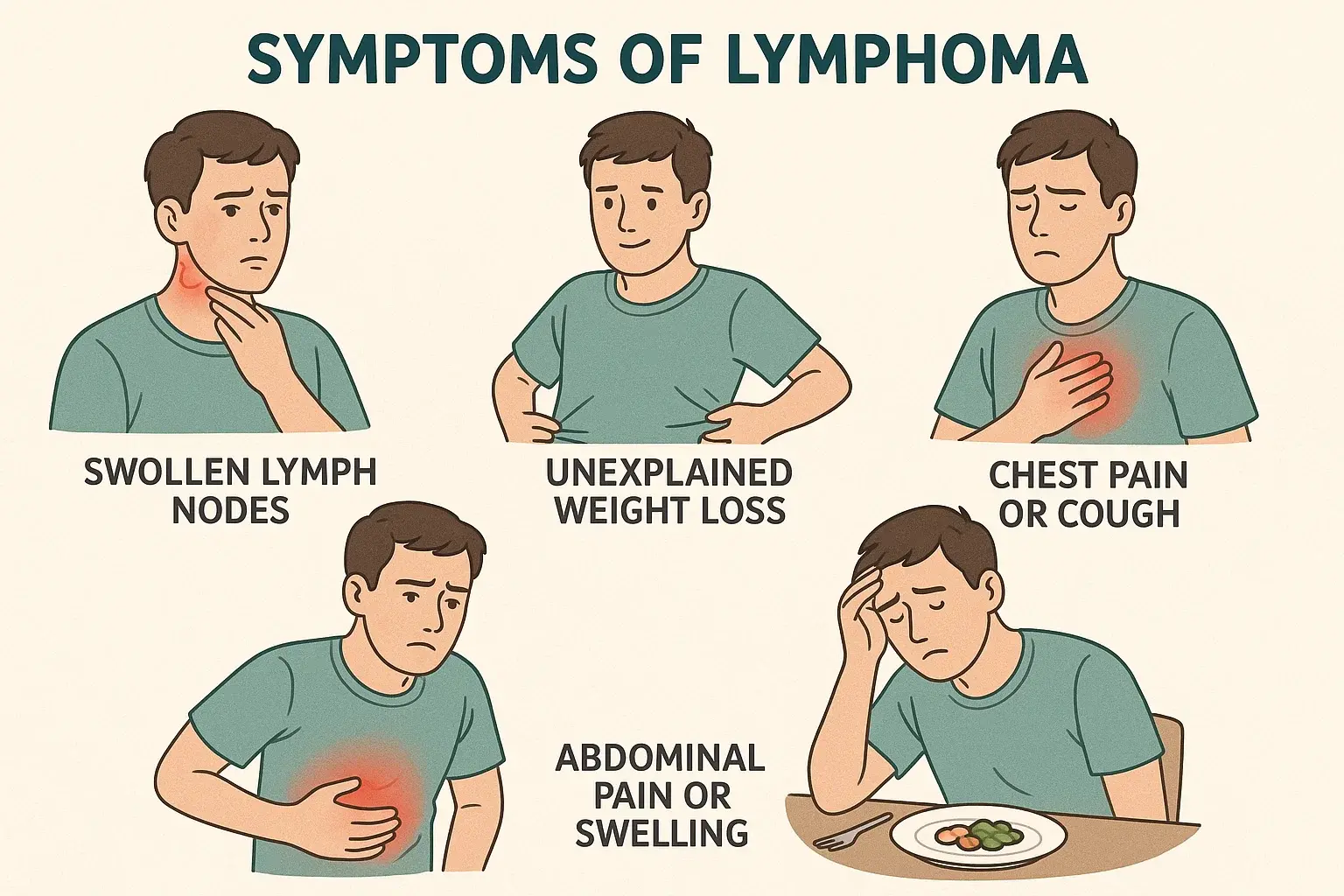
Symptoms of Lymphoma
Some patients may also experience shortness of breath, itchy skin, or frequent infections. Early recognition of these symptoms is vital, as timely lymphoma treatment in India can lead to successful management and, in many cases, complete remission or long-term control.
- Swollen lymph nodes: Usually painless and appear in the neck, underarms, or groin
- Unexplained weight loss: Rapid loss of body weight without changes in diet or activity
- Night sweats: Heavy sweating during sleep, often soaking clothes or sheets
- Persistent fatigue: Ongoing tiredness that doesn’t improve with rest
- Fever: Intermittent or persistent fever without any apparent cause
- Shortness of breath: Often due to enlarged lymph nodes pressing on airways
- Itchy skin (pruritus): Unexplained and persistent itchiness without visible rash
- Abdominal pain or swelling: Caused by lymph node or organ involvement
- Chest pain or cough: If lymphoma develops in the chest area
- Frequent infections: Due to a weakened immune response
- Bleeding or bruising easily: When bone marrow is affected
- Loss of appetite: A general feeling of being unwell or full quickly
Book Appointment
GET A FREE QUOTE
Causes of Lymphoma
Lymphoma arises when lymphocytes, a type of white blood cell, begin to grow and divide abnormally. The exact cause isn’t always known, but several risk factors are believed to contribute, including weakened immunity, infections, genetic mutations, and environmental exposures.
Some people may have a higher likelihood of developing lymphoma due to autoimmune disorders, chronic inflammation, or prolonged use of immunosuppressive drugs. Understanding these causes can help in prevention, early detection, and timely access to lymphoma treatment in India for better outcomes.
- Weakened Immune System: HIV/AIDS, organ transplant recipients, and those on immunosuppressive therapy
- Viral Infections: Epstein-Barr virus (EBV), Human T-cell leukaemia virus (HTLV-1), and Hepatitis C
- Bacterial Infections: Helicobacter pylori linked with gastric MALT lymphoma
- Genetic Mutations: Changes in DNA can lead to abnormal lymphocyte growth
- Autoimmune Diseases: Lupus, rheumatoid arthritis increase the risk of lymphoma
- Family History: Having close relatives with lymphoma may raise your risk
- Age and Gender: Risk increases with age; some types are more common in males
- Chemical Exposure: Pesticides, herbicides, and industrial chemicals may play a role
- Radiation Exposure: Prior radiation therapy or high-dose exposure
- Obesity: Excess body weight is linked to an increased risk of certain lymphomas
What are the 8 types of lymphoma cancer?
Lymphoma is broadly classified into Hodgkin lymphoma (HL) and Non-Hodgkin lymphoma (NHL), each with several subtypes. Understanding the different types is essential for accurate diagnosis and effective lymphoma treatment in India. Each type responds differently to treatment, and lymphoma treatment in India is tailored with chemotherapy, radiation, immunotherapy, or bone marrow transplant based on the subtype and stage.
- Classical Hodgkin Lymphoma (cHL) – The most common HL, marked by Reed-Sternberg cells.
- Nodular Lymphocyte-Predominant Hodgkin Lymphoma (NLPHL) – A rare form with a slow growth rate.
- Diffuse Large B-Cell Lymphoma (DLBCL) – The most common aggressive NHL.
- Follicular Lymphoma – A slow-growing (indolent) NHL that may become aggressive over time.
- Mantle Cell Lymphoma – A rare but fast-growing B-cell NHL.
- Burkitt Lymphoma – A highly aggressive NHL affecting children and adults.
- T-Cell Lymphoma – Includes several subtypes like Peripheral T-cell and Cutaneous T-cell Lymphoma.
- Marginal Zone Lymphoma – An indolent form often linked to chronic infections.
Cost of Lymphoma Treatment in India
The cost of lymphoma treatment in India is significantly lower compared to many Western countries, without compromising on quality. Depending on the type, stage, and treatment method—such as chemotherapy, radiation, immunotherapy, or bone marrow transplant—the cost can vary.
Book Appointment
GET A FREE QUOTE
Government and private hospitals offer advanced care with state-of-the-art technology and skilled oncologists. The affordability, combined with high success rates, makes India a preferred destination for lymphoma treatment. Most hospitals offer package-based treatment plans for ease and transparency. Early diagnosis can reduce both complexity and cost, improving overall outcomes and recovery chances.
|
Treatment Type |
Estimated Cost (INR) |
Estimated Cost (USD) |
|
Chemotherapy (per cycle) |
₹25,000 – ₹60,000 |
$300 – $720 |
|
Full Chemotherapy Course |
₹1.5 – ₹4.5 Lakh |
$1,800 – $5,400 |
|
Radiation Therapy |
₹1.5 – ₹3 Lakh |
$1,800 – $3,600 |
|
Bone Marrow Transplant (BMT) |
₹12 – ₹25 Lakh |
$14,000 – $30,000 |
|
Immunotherapy (per cycle) |
₹1.5 – ₹3 Lakh |
$1,800 – $3,600 |
|
Targeted Therapy |
₹80,000 – ₹2 Lakh |
$960 – $2,400 |
|
Hospital Stay (10–15 days) |
₹40,000 – ₹90,000 |
$480 – $1,080 |
Best Hospital for Lymphoma Treatment in India
India is home to some of the most advanced and internationally accredited hospitals offering lymphoma treatment with excellent infrastructure, experienced oncologists, and access to cutting-edge therapies like chemotherapy, radiation, bone marrow transplant, and immunotherapy. These hospitals follow globally accepted protocols and provide comprehensive cancer care at a fraction of the cost compared to Western nations.
With high success rates and multidisciplinary teams, they attract patients from across the globe. Many offer international patient services, holistic care, and post-treatment rehabilitation, making lymphoma treatment in India both effective and accessible.
|
Hospital Name |
City |
|
Tata Memorial Hospital |
Mumbai |
|
All India Institute of Medical Sciences (AIIMS) |
New Delhi |
|
Apollo Hospitals |
Chennai |
|
Fortis Memorial Research Institute |
Gurugram |
|
Max Super Speciality Hospital |
New Delhi |
|
Medanta – The Medicity |
Gurugram |
|
BLK-Max Super Speciality Hospital |
New Delhi |
|
Manipal Hospitals |
Bangalore |
|
Kokilaben Dhirubhai Ambani Hospital |
Mumbai |
|
Rajiv Gandhi Cancer Institute |
New Delhi |
|
Artemis Hospital |
Gurugram |
|
Christian Medical College (CMC) |
Vellore |
|
HCG Cancer Centre |
Bangalore |
|
Amrita Institute of Medical Sciences |
Kochi |
|
Narayana Health |
Bangalore |
Success Rate of Lymphoma Treatment in India
The success rate of lymphoma treatment in India is high, particularly due to early diagnosis, skilled oncologists, and access to advanced therapies. For Hodgkin lymphoma, India reports a survival rate of 85–90% in early-stage cases, and 65–75% in advanced stages with proper chemotherapy and radiation.
For non-Hodgkin lymphoma (NHL), the success rate varies depending on the subtype. Diffuse large B-cell lymphoma (DLBCL), the most common NHL, shows a 5-year survival rate of around 60–70%, while indolent types like follicular lymphoma can have long-term disease control with survival rates exceeding 80%.
Book Appointment
GET A FREE QUOTE
Indian hospitals use globally accepted protocols such as R-CHOP, CAR-T, immunotherapy, and bone marrow transplants for refractory cases, significantly improving outcomes. The affordability and accessibility of world-class care also ensure that patients receive continuous, high-quality treatment. With timely intervention, lymphoma treatment in India can offer excellent recovery and long-term remission rates.
We Care Health Services For Lymphoma Treatment in India
We Care Health Services is a combined programme for various services and information regarding treatment in India. It is working wth coordination to famous hospitals which is known for their high success rate in surgeries. Whole treatment for cancer, cardiac problems and fertility problems is covered for both Indian Citizens and foreign patients. They have the best guidance in various fields of treatment. Here are some of the best facilities provided by their clinics:
- 24*7 emergency care units for any kind of patient.
- Known for the best treatment across the globe
- Has affordable services for various medical problems.
- Facilities for minimally invasive surgeries
- Cardiac, neurosurgery, fertility and pediatric services are at the top, which are presented with testimonials.
- Proper labs and technical services for diagnostic purposes.
- Expert surgeons and doctors for different treatments.
- Access to JCI/NABH-accredited hospitals across major cities, ensuring patients receive care from the top oncology centres in India
- Full facilitation: visa, local travel, accommodation, interpreters, and case managers ensure a smooth experience.
- Offers nutritional counselling, psychological support, and post-treatment rehabilitation to aid recovery and overall well-being.
- Pre-arrival and post-treatment teleconsultations help monitor patients, adjust protocols, and maintain continuous care from afar
Frequently Asked Questions:
Even in advanced stages, with aggressive treatment and close monitoring, long-term remission is achievable in a large number of cases. Many patients go on to live full, cancer-free lives after completing treatment. Relapsed or refractory cases can still respond well to high-dose chemotherapy followed by autologous stem cell transplantation, further improving survival rates.