
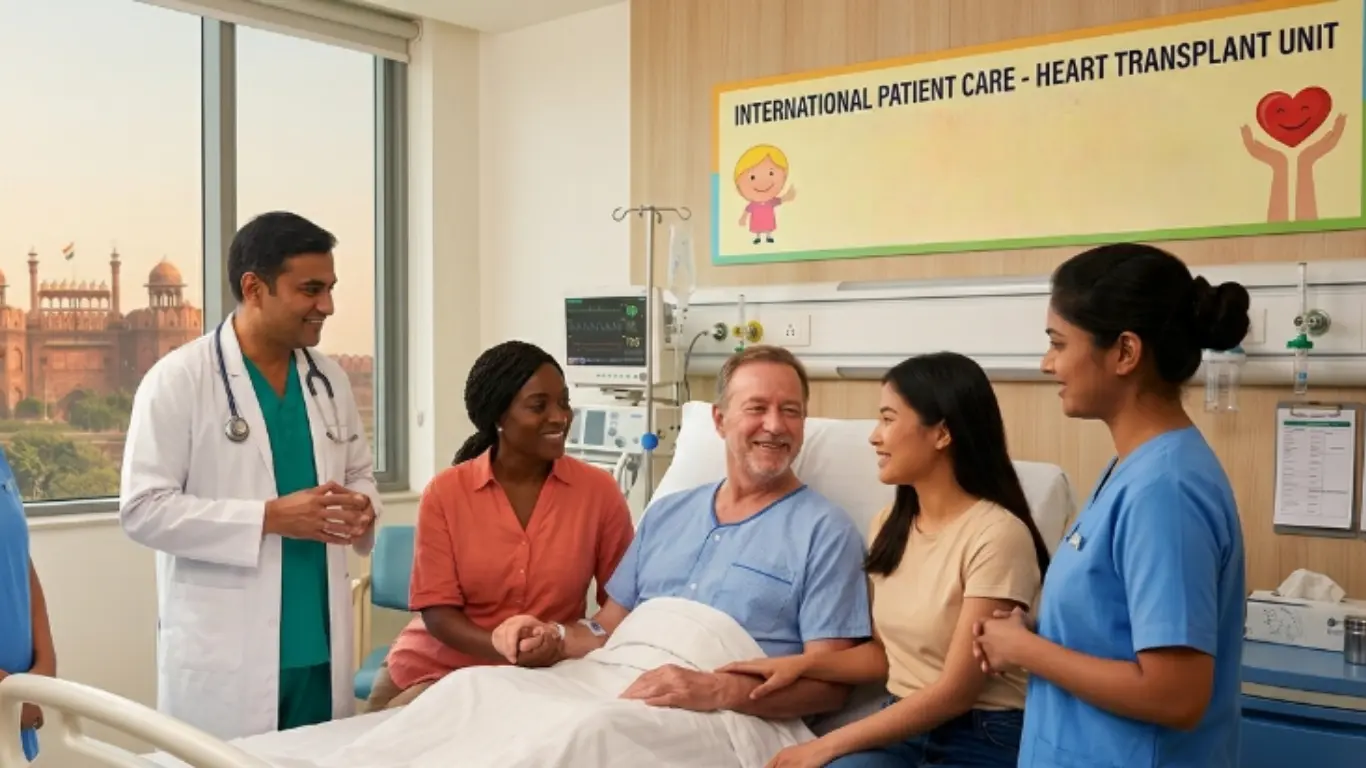
Heart Transplant in India for Foreign Patients
Heart transplantation in India has become far less complex with modern technology. Minimally invasive procedures are now standard, and doctors have developed methods that reduce dependency on immunosuppressive agents.
Heart transplant surgery is a life-saving procedure in which a diseased or failing heart is replaced with a healthy donor heart. It is typically performed on patients with end-stage heart failure or severe heart conditions that cannot be managed through medication or other treatments.
A heart transplant in India is recommended when a person's heart is severely damaged and cannot pump blood effectively. Full procedures cost a third of U.S. prices — including surgery, hospital stay, and follow-up care.
- Life-Saving Procedure — Replaces a diseased heart with a healthy donor heart, the definitive treatment for end-stage heart failure.
- Minimally Invasive Techniques — Modern methods reduce surgical complexity and lower dependency on immunosuppressants, improving quality of life.
- Cost-Effective Care — Full procedures cost a third of U.S. prices — surgery, hospital stay, and follow-up — without compromising quality.
- Expert Surgeons — India is home to globally recognized cardiac surgeons specializing in heart transplants.
- Emergency Transplant Pathways — Rapid assessment via India's well-coordinated NOTTO organ network.
- Post-Op Rehabilitation — Comprehensive programs with exercise plans, dietary guidance, and continuous monitoring after surgery.
When Is a Heart Transplant Needed?
These symptoms occur when the heart is no longer able to pump blood efficiently enough to sustain normal life:
- Severe shortness of breath, especially during physical activity or even at rest.
- Persistent fatigue and weakness as the heart struggles to supply oxygen-rich blood to the body.
- Swelling in the legs, ankles, and abdomen (oedema) caused by fluid buildup from poor circulation.
- Frequent chest pain (angina) or irregular heartbeats (arrhythmias).
- Dizziness, fainting, and confusion when the brain does not receive enough blood supply.
- Frequent hospitalizations due to heart failure symptoms unresponsive to other treatments.
What is End-Stage Heart Failure?
End-stage heart failure means your heart can't pump blood well enough to keep you alive without help. It often results from severe cardiomyopathy, coronary artery disease, or congenital heart defects. Heart transplant in India offers hope for those in this situation.
The Evaluation Process for Candidates
A multidisciplinary team reviews your medical history and runs tests — blood work, heart scans, and blood typing to match with donors. Leading centers across India make this process smooth and thorough.
Start Your Heart Transplant Journey Today
Our specialists guide you through every step — from initial evaluation to post-operative recovery.
Write Us a Message
Fill in your details — we will contact you within 24 hours.
🔒 Your information is 100% safe and confidential.
Types of Heart Transplant Procedures in India
There are mainly two types: Orthotopic and Heterotopic transplantation. The second is rare and performed only in specific conditions where some original heart function remains.
1. Orthotopic Transplantation (OHT) — Most Common
- Old heart removed; new donor heart placed in same position
- Surgery links major blood vessels and the aorta
- Takes 4–6 hours under general anesthesia
- Hospital stay of 1–2 weeks post-operation
- Indian surgeons excel at this with low complication rates
2. Heterotopic Transplant — Specialized Technique
- New heart placed alongside the old one to assist function
- Used when original heart tissue retains some capability
- Post-surgery drugs suppress immune system to avoid rejection
- Available at leading centers across India
3. Combined Organ Transplants — Heart + Kidney / Heart + Liver
- Heart-lung transplants address both organ failures at once
- Combined Kidney-Heart Transplant available
- Combined Liver-Heart Transplant available
- All grafts completed in a single operative session
4. Mechanical Circulatory Support — Bridge to Transplant
- LVADs pump blood from the heart's left side while awaiting a donor
- Acts as a bridge to transplant, buying critical time
- Patients can walk, work, and wait more comfortably
- LVAD costs in India are significantly lower than abroad
Outcomes & Benefits of Heart Transplant in India
India achieves over 90% one-year survival rates at leading centers — outcomes that compare favorably with top global institutions, at a fraction of the cost.
Growing Expertise
The number of heart transplants in India has risen from 53 in 2014 to 241 in 2018, reflecting the country's rapidly growing expertise. The 5-year survival rate is 70–75% after heart transplant surgery in India.
Cost vs. Western Nations
Full procedures cost a third of U.S. prices — covering surgery, hospital stay, and follow-up care — with no compromise on quality or outcomes.
Superior Clinical Outcomes
- One-year survival hits 90% at leading centers
- Five-year rates reach 75%, close to global tops
- Patients report significantly better energy and fewer symptoms
- Quality of life improves substantially after recovery
- Indian teams continuously track outcomes to keep improving standards
- Results backed by experienced, high-volume programs
Cost of Heart Transplant Surgery in India
Heart transplant surgery typically lasts 3–6 hours depending on grafts required. Medical visa fees are not included in costs below.
| Procedure Type | Description | Cost (INR) | Cost (USD) |
|---|---|---|---|
| Orthotopic Heart Transplant | Diseased heart replaced with donor heart | ₹34,34,900 | ~$45,000 |
| Heterotopic Heart Transplant | Donor heart added alongside existing heart | ₹45,79,900 | ~$60,000 |
| Combined Kidney-Heart Transplant | Heart and kidney transplanted together | ₹26,00,000 | ~$34,750 |
| Combined Liver-Heart Transplant | Heart and liver transplanted together | ₹35,00,000 – ₹38,00,000 | $45,000–$49,500 |
ℹ️ Heart transplant surgery is expensive. Costs cannot generally be reduced unless covered by insurance.
Medical Visa for Heart Transplant in India
A Medical Visa is mandatory for both the patient and donor. We Care Health Services assists patients from around the world with the complete visa process.
Doctor Certificate
A certificate from your treating doctor confirming the heart transplant requirement.
Diagnosis Report
Complete medical records and doctor's recommendation regarding heart disease.
Hospital Invitation Letter
An acceptance letter from a hospital or recognized agency in India — We Care can facilitate this.
Financial & Identity Proof
Financial proof, valid passport, and recent passport-sized photographs.
Visa Application Form
Complete the visa application form with all documents compiled and submitted together.
Government Authorization
Authorization Committee approval is mandatory before the transplant can proceed.
Legal & Ethical Framework: India follows strict rules under the Transplantation of Human Organs and Tissues Act (THOTA). The National Organ and Tissue Transplant Organisation (NOTTO) matches donors to receivers based on medical urgency and blood type — building trust and reducing wait times.
Top Centers for Cardiac Transplantation in India
India is now a global medical hub for cardiac surgery, combining technical excellence with comprehensive patient care — from pre-diagnosis to post-operative nutrient regulation.
Identifying Centers of Excellence
Select centers by track record — look for facilities performing over 50 procedures annually. Hospitals like Apollo and Fortis lead in heart transplant outcomes.
Technology & Donor Management
Top hospitals use 3D echocardiography and cardiac MRI for precise surgical planning. NOTTO links hospitals for rapid organ matching, making Indian facilities genuinely world-class.
Multidisciplinary Teams
Dedicated coordinators guide you from referral to discharge. Nurses monitor vitals around the clock. Dietitians plan heart-friendly meals. This integrated team approach covers all bases.
Life After Your Heart Transplant
NOTTO manages the waiting list by urgency and compatibility. Average wait time varies by months. During this time — eat well, exercise lightly, and strictly follow your medications.
- Anti-Rejection Drugs — Take immunosuppressants daily. Watch for fever or swelling and contact your doctor promptly.
- Low-Salt Diet — Adopt a heart-healthy, low-sodium diet. Dietitians provide personalized meal guidance.
- Daily Walking — Aim for 30 minutes of walking most days to gradually rebuild strength.
- Avoid Infections — Avoid crowded spaces to minimize infection risk. Wash hands frequently.
- Regular Check-Ups — See your cardiologist every few months. Never skip scheduled medications.
- Mental Wellbeing — Psychiatrists support mood changes. Social workers assist with family stress and adjustment.
Immunosuppression Management
After surgery, anti-rejection drugs weaken immunity to help the body accept the new heart. The first few months are critical — graft function is checked weekly. India's clinics keep these medications affordable for long-term use. Gradual steroid tapering and CNI reduction are common management strategies.
Long-Term Lifestyle Adjustments
Many patients return fully to work, travel, and hobbies. A low-salt diet, regular moderate exercise, infection awareness, and consistent medical follow-ups are the pillars of long-term success. It is genuinely a fresh start with smart daily choices.
Ready to Take the Next Step?
Our transplant coordinators and patient support team are available to help you understand your options and plan your treatment journey in India.
Write Us a Message
Fill in your details — we will contact you within 24 hours.
🔒 Your information is 100% safe and confidential.
Frequently Asked Questions
Clear, honest answers to the most common questions about heart transplants in India.
Your New Chapter Awaits
Heart transplants in India combine surgical excellence, significant cost savings, and comprehensive patient support. From orthotopic transplants to mechanical bridge devices, options exist for most needs. Top facilities and experienced teams ensure smooth journeys from consultation to recovery.
Free Consultation
Fill in your details — we will contact you within 24 hours.