
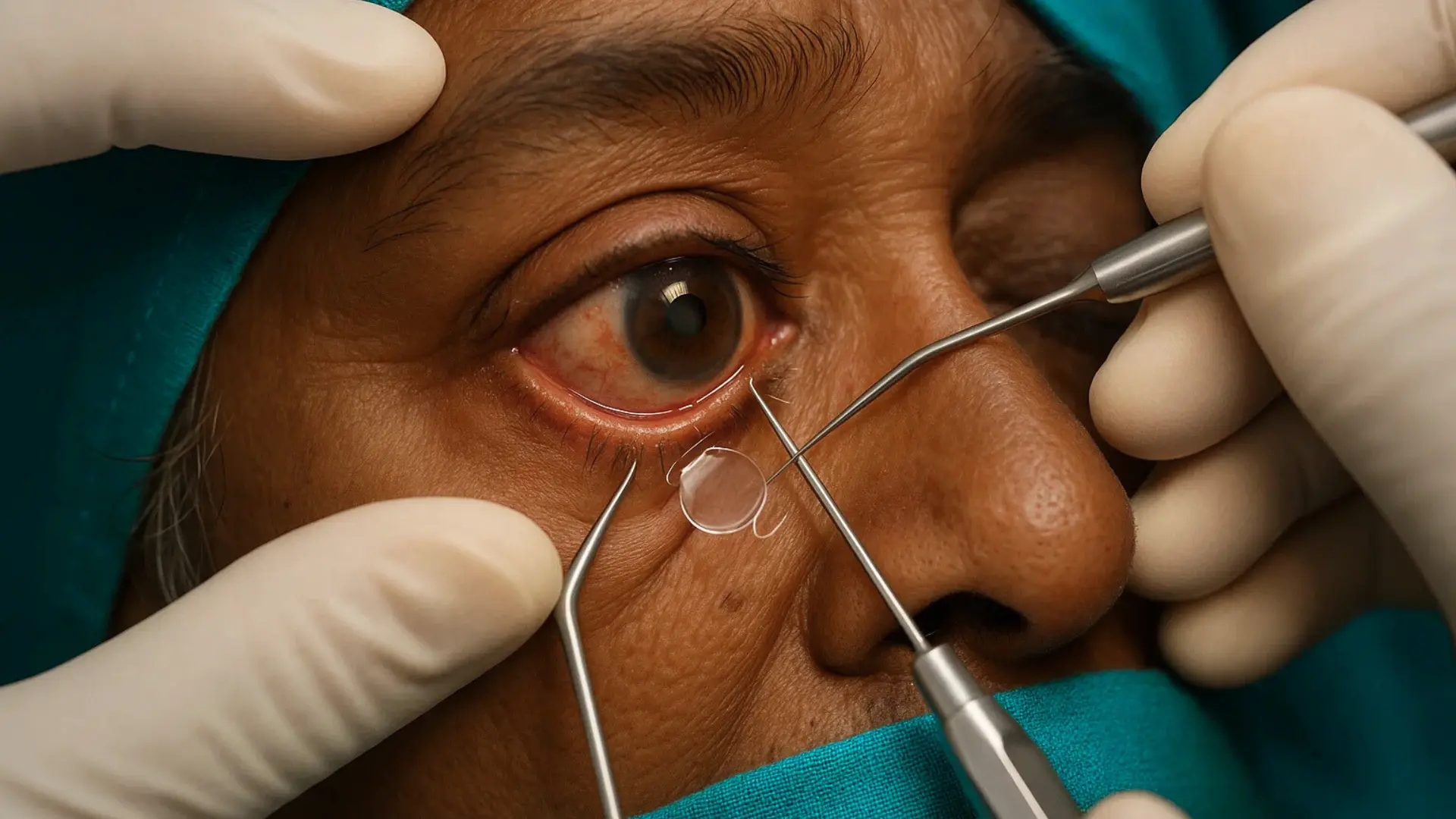
Cataract implant surgery in India is an effective solution for cataract patients. It is a degenerative disease. People who take steroids for long periods, have diabetes, or UV are prone to cataracts. It increases progressive symptoms, starting from blurred vision or the absence of dim light vision.
Book Appointment
GET A FREE QUOTE
For the exact solution of the diseases, the only option is surgery. Cataract can affect both eyes gradually, meaning it increases with time. It is necessary to diagnose this in the early stage; otherwise, it can’t be treated effectively.
What is Cataract?
A cataract is an uncommon eye condition where the natural lens of the eye becomes cloudy, and it leads to blurred or dim vision. This clouding is caused by the breakdown of proteins in the lens, which prevents light from passing clearly to the retina. Cataracts can develop gradually and affect one or both eyes at the same time.
They are most commonly age-related but may also result from injury, diabetes, prolonged steroid use, or excessive exposure to UV rays. Early symptoms include faded colours, glare sensitivity, double vision, and trouble seeing at night. Cataract surgery is the only effective treatment and is highly successful.
What is Cataract Implant Surgery?
Cataract implant surgery in India is a highly advanced and commonly performed procedure to treat cataracts, where the eye’s natural lens becomes cloudy and impairs vision. In this surgery, the cloudy lens is removed and replaced with an artificial intraocular lens (IOL), restoring clear vision.
The procedure is quick, painless, and usually completed within 30 minutes under local anaesthesia. India offers world-class ophthalmic care at affordable prices, making it a preferred destination for this treatment. Various lens options, including monofocal, multifocal, and toric IOLs, are available. Cataract implant surgery in India ensures excellent outcomes with minimal downtime and high success rates.
Symptoms of Cataract
Cataracts develop gradually and may not show immediate signs. As the condition progresses, individuals often notice cloudy or blurred vision, difficulty seeing at night, and increased sensitivity to light or glare. Colours may appear faded, and one might experience halos around lights.
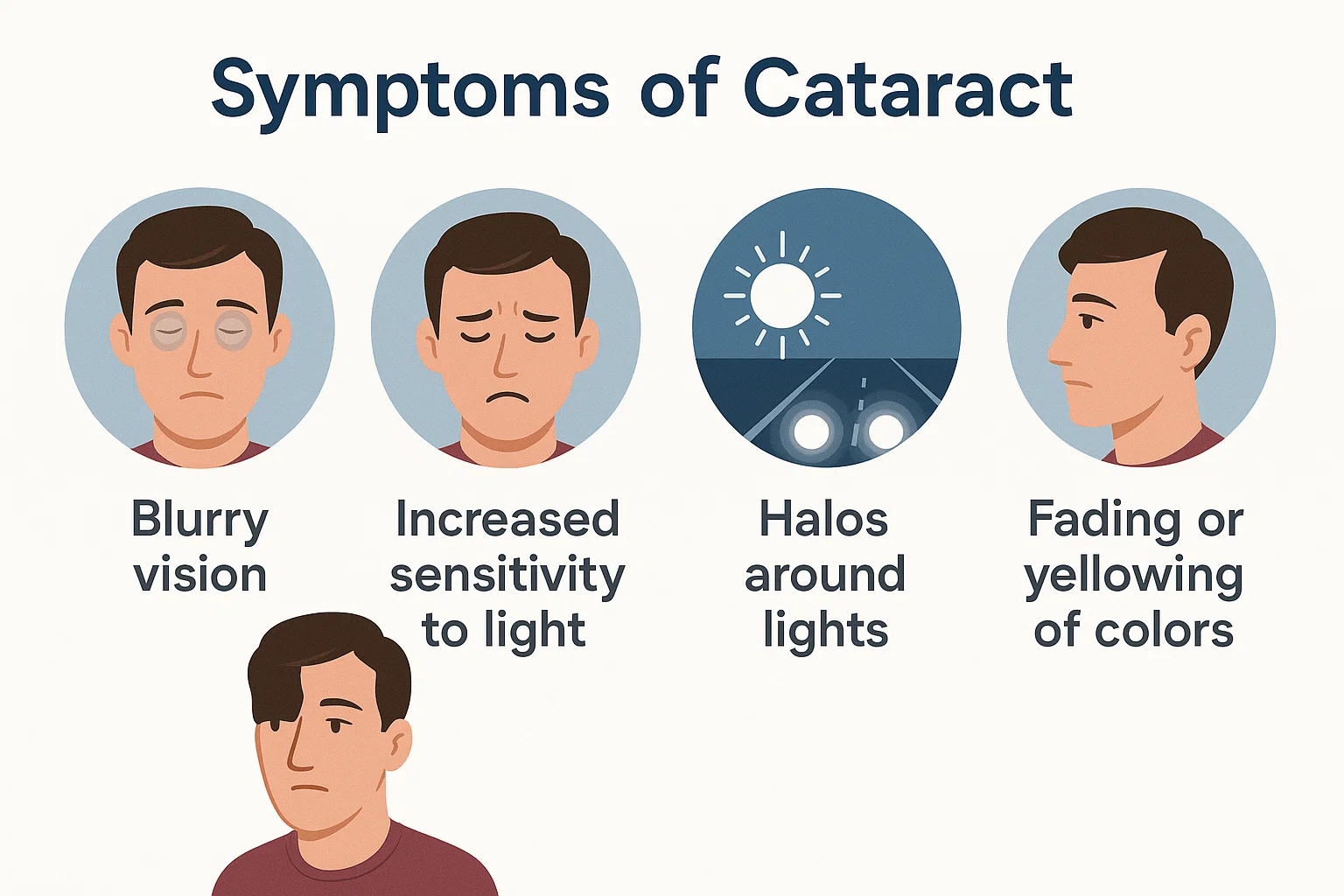
Symptoms of Cataract
Frequent changes in eyeglass prescriptions can also indicate cataracts. Over time, these symptoms can interfere with daily activities like reading or driving, prompting the need for medical evaluation and possible cataract implant surgery in India.
Book Appointment
GET A FREE QUOTE
- Blurred or cloudy vision, as if looking through a foggy window
- Faded or yellowed colours, making it hard to distinguish shades
- Increased sensitivity to light and glare, especially in sunlight
- Halos around lights, particularly at night or in low-light environments
- Poor night vision, making driving after dark difficult
- Frequent changes in eyeglass or contact lens prescriptions
- Double vision in one eye, also known as monocular diplopia
- Need for brighter light while reading or doing close-up work
- Difficulty recognising faces due to reduced visual clarity
- General eye strain or headaches from struggling to focus
- Reduced depth perception, which may cause imbalance
- Vision that improves temporarily, known as second sight (early cataract symptom)
- These symptoms worsen over time and can severely impact daily life.
Symptoms of Causes
Cataracts usually develop as a natural part of aging, but several other factors can contribute. Prolonged UV exposure, eye injuries, diabetes, and long-term use of steroids are common causes.
- Ageing – The most common cause is due to natural changes in the eye’s lens over time
- Genetics – A Family history of cataracts increases risk.
- Eye injuries or trauma can damage the lens and trigger cataract formation
- Diabetes – High blood sugar can lead to quicker lens clouding
- Long-term use of corticosteroids, especially in high doses.
- Excessive exposure to ultraviolet (UV) rays- without proper eye protection.
- Smoking and alcohol consumption- contribute to oxidative stress in the eye
- Radiation exposure – including cancer treatments or high-altitude UV radiation
- Previous eye surgeries- can increase the likelihood of cataract development.
- Nutritional deficiency – Lack of antioxidants like vitamins C and E.
- Congenital factors – Cataracts present at birth or develop in childhood.
Lifestyle choices like smoking and excessive alcohol intake can also increase the risk. Sometimes cataracts are present from birth or appear in childhood due to genetic conditions. Poor nutrition, especially a lack of antioxidants, may speed up lens clouding. Each of these factors disrupts the eye’s ability to maintain lens clarity.
What are the 4 types of cataract lenses?
There are different conditions of the eye lens at the time of diagnosis. Based on this, there are four types of cataract lenses. Patients with astigmatism and toric vision use different lenses. There are different lenses for multiple lenses. So, based on the type of conditions of the patient, here is are lens explanation:
Book Appointment
GET A FREE QUOTE
Cataract Surgery Implant Cost
Cataract surgery implant cost in India is relatively affordable compared to many countries, with options to suit different budgets and needs. The total cost depends on the type of intraocular lens (IOL) chosen, the technology used (laser or traditional), and the hospital or surgeon’s experience.
Basic monofocal lenses are less expensive, while premium lenses like multifocal and toric lenses cost more due to their advanced features. On average, cataract surgery in India ranges from ₹15,000 to ₹1,00,000 per eye, making it accessible for both domestic and international patients seeking quality care at a lower cost.
|
Type of Procedure |
Estimated Cost (Per Eye) |
|
Basic Phacoemulsification (Monofocal IOL) |
₹15,000 – ₹30,000 |
|
Phaco with Multifocal IOL |
₹40,000 – ₹70,000 |
|
Toric Lens Implant |
₹45,000 – ₹80,000 |
|
Laser-assisted Cataract Surgery |
₹60,000 – ₹1,00,000 |
|
Premium Accommodative Lens |
₹70,000 – ₹1,00,000 |
Which hospital is best for cataract surgery in India?
India is home to several top-tier eye care centres offering world-class cataract surgery in India. These hospitals are equipped with advanced technology and experienced ophthalmologists skilled in both traditional and laser-assisted procedures. Institutions like AIIMS, LV Prasad Eye Institute, and Sankara Nethralaya are renowned for their high success rates and affordable care.
Book Appointment
GET A FREE QUOTE
Many of these hospitals also serve international patients seeking safe and cost-effective cataract treatment. From diagnosis to post-op care, these hospitals follow global standards, making India a trusted destination for quality eye surgeries, especially cataract operations.
|
Hospital Name |
Location |
|
We Care Health Services |
New Delhi |
|
LV Prasad Eye Institute |
Hyderabad |
|
Sankara Nethralaya |
Chennai |
|
Aravind Eye Hospital |
Madurai & multiple cities |
|
Shroff Eye Centre |
New Delhi |
|
Centre for Sight |
Pan India |
|
Dr. Agarwal’s Eye Hospital |
Pan India |
|
Narayana Nethralaya |
Bangalore |
|
Netrajyoti Eye Hospital |
Kolkata |
|
Visakhapatnam Eye Hospital |
Visakhapatnam |
|
Vasan Eye Care |
Pan India |
|
Aditya Jyot Eye Hospital |
Mumbai |
|
Icare Eye Hospital |
Noida |
|
Disha Eye Hospital |
Kolkata |
|
Eye7 Chaudhary Eye Centre |
New Delhi |
We Care Health Services For Cataract Implant Surgery in India
We Care Health Services is a trusted name for cataract implant surgery in India, offering personalised care, expert surgeons, and access to top-tier hospitals. The organisation ensures patients receive the latest treatments, including premium intraocular lens options, with cost-effective packages. You can shift your treatment from other hospital to us.
With a strong network of accredited eye care centres across major Indian cities, We Care assists with consultation to recovery. Their team helps domestic and international patients navigate every step smoothly, ensuring quality outcomes and a comfortable medical experience in India.
- Access to top hospitals and renowned eye surgeons across India.
- Offers all types of cataract implant surgery: monofocal, multifocal, toric, and accommodative lenses.
- Coordination with NABH & JCI-accredited hospitals in Delhi, Mumbai, Chennai, Hyderabad, Bangalore.
- Pre-surgery consultation, eye scans, and personalised surgical planning.
- Assistance in choosing the right intraocular lens (IOL) based on medical and lifestyle needs.
- End-to-end care for international patients, including visa, accommodation, and language support.
- Packages starting from ₹18,000 for basic phacoemulsification to ₹1,00,000 for premium lens implants.
- Transparent pricing with no hidden charges
- Fast-track surgery appointments with minimal waiting time.
- Post-operative care, follow-up consultations, and recovery support.
- 24/7 helpline for patient queries and emergencies.
- Facilitates medical insurance claims wherever applicable.
- Dedicated patient coordinators for a smooth and stress-free experience.
- Trusted by thousands of patients globally for safe, affordable, and reliable cataract surgery in India